Ethanol Blended Petrol in India, What It Is, What It Does to Your Vehicle, and What Comes Next
-
 Ajit Khandekar
 - 10 Jun, 2026
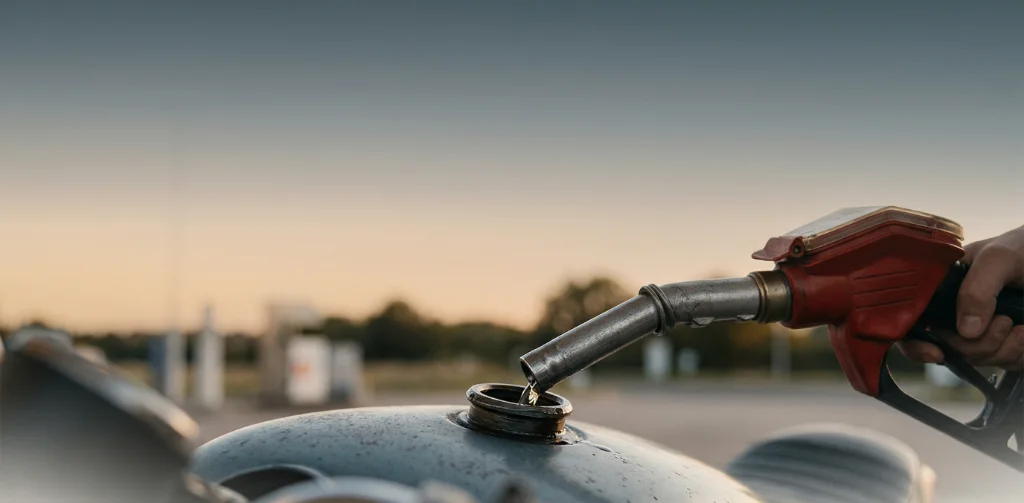
India’s petrol changed permanently in 2025. Every pump at nearly 90,000 fuel stations across the country now dispenses E20, petrol blended with 20 percent ethanol. There was no opt-out, no alternative grade, and no warning on the nozzle. If you own a vehicle built before April 2023, you are already running a fuel your engine was never designed for. This article explains exactly what that means, what it is doing to your vehicle right now, and what the government has planned next.
Table of Contents
- What Ethanol Blending Actually Means
- India’s Blending Roadmap, E5 to E85
- What Ethanol Does to Older Vehicles
- Which Vehicles Are at Risk and Which Are Not
- E85 and Flex Fuel, What Is Actually Available Right Now
- What You Should Do Next
- Sources
What Ethanol Blending Actually Means
Ethanol is an alcohol-based fuel produced from sugarcane, maize, and agricultural waste. In India, sugarcane is the dominant feedstock. When added to petrol, ethanol changes two things that matter most to your engine: energy content and chemical behaviour.
Ethanol contains roughly 34 percent less energy per litre than pure petrol. In an E20 blend, about one fifth of the fuel in your tank carries less energy. Your engine burns through the tank faster to deliver the same power. That is where mileage loss originates, before any question of engine compatibility arises.
The second issue is more serious for older vehicles. Ethanol is hygroscopic, meaning it actively absorbs moisture from the atmosphere. That moisture enters your fuel system and does not simply evaporate. It stays, mixes with ethanol to form a mildly acidic solution, and begins attacking every component it contacts, metal, rubber, and aluminium alike. This is the root cause of the corrosion, seal failure, and carburettor damage that pre-BS6 vehicle owners have been reporting since the E20 rollout.
Bureau of Indian Standards specification IS 2796 governs E20 petrol in India and mandates a minimum Research Octane Number of 95. Every litre of standard petrol at every pump in India, including XP95, is E20 under this specification. There is no standard-grade ethanol-free option at Indian pumps.
India’s Blending Roadmap, E5 to E85
India’s ethanol blending programme has moved faster than almost any comparable policy in the country’s history.
E5 and E10 (2013 to 2022): Blending started at 1.5 percent in the 2013-14 ethanol supply year and reached 10 percent by 2021-22. E10 was the standard fuel at most pumps until 2025. It is no longer available.
E20 (2025 onwards): The government’s original E20 target was 2030. It was first advanced to 2025, then to April 2023 for select regions. Nationwide rollout was completed in 2025, five years ahead of the original schedule. E20 is now the only grade of standard petrol available across India.
E30 (announced, not yet at pumps): In a formal notification dated 15 May 2026, the Bureau of Indian Standards officially established IS 19850:2026, which sets fuel specifications for E22, E25, E27, and E30 petrol variants. The standard exists. The fuel does not yet. E30 is the next transition and may carry the same risks as E20 for older vehicles, amplified.
E85 (available at select stations): E85 is an 85 percent ethanol blend available at a limited number of IndianOil stations across five states. It is intended exclusively for flex fuel compatible vehicles. A standard bike or car, even a BS6 Phase 2 model, cannot run on E85 without engine damage.
E100 (long-term direction): Union Minister Nitin Gadkari has championed 100 percent ethanol as India’s long-term goal, targeting the country’s 87 percent oil import dependency. There is no confirmed rollout timeline. It requires a complete shift to dedicated flex fuel engines across the entire vehicle fleet.
What Ethanol Does to Older Vehicles
Four specific failure modes affect pre-BS6 vehicles running on E20. Each one is documented, measurable, and in most cases progressive, meaning it gets worse with every tankful.
Mileage drop: Autocar India’s own test programme recorded mileage drops of up to 12 percent on older vehicles during the E20 transition. The Ministry of Petroleum’s official position is a 3 to 6 percent drop for older models. The actual figure for a high-mileage carburetted BS4 bike sits closer to 7 to 15 percent depending on engine condition, riding style, and whether the carburettor has been rejetted. There is no configuration of E20 that delivers equal or better mileage than E0 petrol in the same engine.
Rubber and seal degradation: Ethanol is a solvent. It attacks nitrile rubber, the material used for fuel hoses, carburettor bowl gaskets, and injector seals in vehicles built before ethanol-compatibility became a design requirement. The Ministry of Petroleum acknowledged this in its public guidance, noting that in vehicles with more than 20,000 km on the odometer, rubber gaskets may require replacement. The degradation is not visible until a seal fails, at which point you have a fuel leak, not a warning sign.
Corrosion and moisture damage: Water absorbed by ethanol forms a mildly acidic solution inside your fuel system. Over time this corrodes aluminium carburettor bodies, steel fuel tanks, and brass float valves. The risk is highest during monsoon season when ambient humidity accelerates moisture absorption. Phase separation, where the water-ethanol mixture separates from petrol and settles at the bottom of the tank, is a particular risk for vehicles that sit unused for more than two weeks.
Lean running in carburetted engines: Fuel-injected engines can adjust their air-fuel mixture in real time to compensate for ethanol’s lower energy content. Carburetted engines cannot. A standard carburettor set up for E0 or E10 petrol may run lean on E20, meaning the mixture has too much air relative to fuel. Lean running causes rough idle, misfiring under load, and accelerated valve and piston wear in air-cooled engines over time. Rejetting the carburettor corrects the mixture ratio, but most service centres have not been proactively advising this.
Which Vehicles Are at Risk and Which Are Not
Highest risk, BS3 and older, carburetted engines: All four failure modes apply with no factory mitigation. These vehicles were designed for E0 petrol. Their rubber components, carburettors, and fuel tanks have no ethanol tolerance built in. Mileage drops of 10 to 20 percent are typical. If you own a pre-2010 motorcycle and have noticed increased fuel consumption, rougher idle, or any fuel system issues since 2025, ethanol exposure is the most likely cause.
Moderate risk, BS4, carburetted and early fuel-injected: This is the largest at-risk segment. There are an estimated 75 to 80 million pre-BS4 bikes still on Indian roads, and BS4 adds tens of millions more. BS4 vehicles were designed for E10 at most. Rubber components may tolerate E20 for a period, but degradation is ongoing. Fuel-injected BS4 models handle the lean running issue but remain vulnerable to corrosion and seal degradation. Expect 7 to 15 percent mileage loss on carburetted BS4 models.
Low risk, BS6 Phase 2, manufactured after April 2023: These vehicles are factory E20-compliant. Engine components, fuel system materials, and ECU calibration are all designed for E20. A 3 to 5 percent mileage reduction compared to E0 petrol is inherent to ethanol’s energy density and is not a fault. If your BS6 Phase 2 vehicle is showing more than a 5 percent mileage drop, the cause is elsewhere.
E85 and Flex Fuel, What Is Actually Available Right Now
E85 is not a future concept in India. It is available today, in limited locations, for a specific category of vehicle.
IndianOil is currently supplying E85 at select stations across five states. The fuel is sold as “Ethanol 100” at these locations and is intended for flex fuel vehicles only. A flex fuel vehicle has an engine, fuel system, and ECU designed to run on any blend from E0 to E85 without modification. Standard petrol vehicles, including all current BS6 Phase 2 bikes and cars, are not flex fuel compatible.
The Ministry of Road Transport and Highways has issued a draft notification proposing amendments to the Central Motor Vehicles Rules to formally incorporate E85 and E100 fuels. The draft is open for public comment. This is regulatory groundwork, not a rollout announcement.
Ensuring E85 compatibility requires far more than E20 compliance. Higher ethanol concentrations introduce significantly greater moisture exposure, accelerated corrosion risk, and different combustion characteristics. Manufacturers may need to redesign specific engine components, fuel system materials, and injection calibration for E85. You cannot make a standard vehicle E85-compatible through a retrofit kit or ECU remap.
For E30, the BIS standard IS 19850:2026 is now in place. The specification exists. Pump availability has not been announced. When E30 does roll out, the impact on BS4 and older vehicles may be greater than E20, the same failure modes with higher ethanol concentration driving faster degradation.
What You Should Do Next
Your action depends entirely on which category your vehicle falls into.
If you own a BS6 Phase 2 vehicle manufactured after April 2023: Measure your mileage over the next two full tanks using a consistent method, same route, same riding style, full-to-full calculation. A 3 to 5 percent reduction from what your owner manual states is normal and expected on E20. If you are seeing more than 5 percent, visit your authorised service centre. The cause is not the fuel, it is engine condition, tyre pressure, or another maintenance issue.
If you own a BS4 vehicle: At your next service, specifically ask the mechanic to inspect rubber fuel lines, the carburettor bowl gasket, and the fuel filter. Do not wait for a failure. Ask whether the carburettor jetting is correct for E20. Note any misfiring, rough idle at startup, or unexplained drop in tank range, these are early signs of lean running or seal degradation. Document your mileage per tank now so you have a baseline for comparison.
If you own a BS3 or older vehicle: Understand your options clearly. Ethanol-free petrol exists in India, XP100 from IOCL, Speed 100 from BPCL, and Power 100 from HPCL are all 100 RON, E0 fuel, available at select pumps at approximately Rs 160 to 180 per litre. This is not practical for daily use given the price and availability. The realistic path is targeted maintenance: replace nitrile rubber fuel hoses with Viton FKM equivalents, inspect the fuel tank for internal corrosion, and rejett the carburettor if you are experiencing lean running symptoms. These are not large interventions. They are the difference between a vehicle that degrades slowly and one that fails at an inconvenient time.
The government may not slow the ethanol programme. E30 has a published BIS standard and E85 is already at pumps in five states. The question for older vehicle owners is not whether to adapt, it is how quickly and at what cost.
Sources
- Bureau of Indian Standards, IS 2796 E20 Petrol Specification
- Bureau of Indian Standards, IS 19850:2026 E22 to E30 Fuel Standard, May 2026
- Ministry of Petroleum and Natural Gas, Ethanol Blending Programme
- Ministry of Road Transport and Highways, Draft Notification E85 and E100, 2026
- Autocar India, How E20 Petrol Affects Your Bike and Scooter, September 2025
- SIAM Statement on E20 Mileage Impact, August 2025
- Drivespark, India Issues E85 and E100 Draft Notification, April 2026
- iamabiker, India’s Ethanol Blending Story, May 2026