How E20 Damages Rubber Fuel Lines, And Which Material Actually Holds Up
-
 Ajit Khandekar
 - 16 Jun, 2026
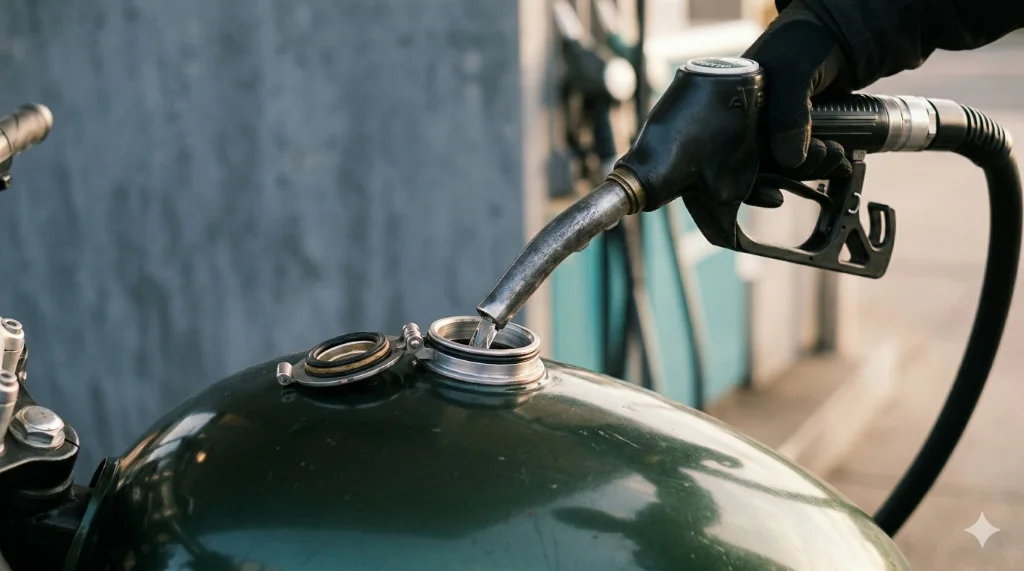
The fuel hoses on your bike or car are not a single piece of rubber. They are a layered assembly, an inner tube that contacts the fuel, a reinforcing braid for pressure, and an outer cover for protection. The inner tube material is what determines whether your fuel system holds up or deteriorates on E20 petrol. In most pre-BS6 Phase 2 vehicles, that inner tube is made from nitrile rubber. Nitrile rubber and ethanol have a problem.
This article explains exactly what that problem is, how to identify early degradation before it becomes a failure, and what the correct replacement material is and where to source it in India.
Table of Contents
- What Nitrile Rubber Is and Why It Was Used
- What Ethanol Does to Nitrile Rubber
- Which Hoses Are at Risk in Your Vehicle
- How to Identify Nitrile Rubber Degradation Early
- Viton FKM, What It Is and Why It Holds Up
- Other Materials, What Works and What Does Not
- Sourcing Viton Fuel Hose in India
- What to Tell Your Mechanic
- How Much Does Replacement Cost
- Sources
What Nitrile Rubber Is and Why It Was Used
Nitrile rubber, technically acrylonitrile-butadiene rubber, abbreviated NBR, became the dominant fuel hose material in the Indian automotive industry because it performs well in the application it was designed for: carrying petroleum-based fuel at low to moderate temperatures and pressures.
Nitrile’s properties match the original fuel system requirements precisely. It is resistant to mineral oils, petrol, and diesel. It is flexible across the temperature range that Indian motorcycles and cars operate in. It is inexpensive to manufacture at scale. It meets the SAE J30 specifications that most OEM fuel system suppliers were designing to when India’s current vehicle fleet was built.
The acrylonitrile content in nitrile rubber, typically between 28 and 45 percent, determines how oil-resistant the compound is. Higher acrylonitrile content improves petroleum resistance. Most automotive-grade nitrile runs at 33 to 40 percent acrylonitrile, which gives excellent performance in petroleum fuels.
The problem is that nitrile’s petroleum resistance does not extend to ethanol. Ethanol is an alcohol, not a petroleum derivative. Its molecular behaviour in contact with nitrile rubber is fundamentally different from petrol’s behaviour, and the result is chemical degradation of the rubber matrix rather than mere surface contact.
What Ethanol Does to Nitrile Rubber
Ethanol is a polar solvent. Nitrile rubber, despite its resistance to non-polar solvents like petroleum, is susceptible to polar solvents. When ethanol in E20 fuel contacts nitrile rubber continuously over weeks and months, three things happen in sequence.
Swelling: Ethanol molecules penetrate the rubber matrix and displace the cross-linked polymer chains. The rubber absorbs ethanol and expands. A nitrile hose that was a tight fit on a carburettor nipple may swell enough to restrict fuel flow or, paradoxically, to loosen if the expansion causes it to deform outward rather than inward. Internal diameter restriction reduces fuel delivery. Loss of grip on nipple fittings creates leak risk.
Softening: As ethanol displaces the cross-links in the rubber matrix, the material loses its mechanical integrity. A hose that was firm and resilient becomes soft and pliable, not in the way that new rubber is pliable, but in the way that overcooked food is pliable. It has lost structural strength. At this stage the hose may feel normal on the outside but may fail under the pulsing fuel pressure that a running engine generates.
Permeation and cracking: In the later stages of degradation, ethanol physically permeates through the hose wall. You may notice a faint petrol smell around the fuel system even when there is no visible leak. This is ethanol vapour passing through softened nitrile rubber. Eventually the outer surface cracks, and a hairline crack in a softened hose under fuel pressure is a fuel leak waiting to happen.
The timeline for this progression on E20 depends on the original nitrile compound quality, hose age, and operating temperature. High-acrylonitrile nitrile compounds (above 40 percent) have somewhat better ethanol resistance and may progress more slowly. Standard automotive-grade nitrile at 33 to 36 percent acrylonitrile content, which is what most Indian OEM fuel hoses use, begins showing measurable swelling within six months of continuous E20 exposure in testing conditions.
Which Hoses Are at Risk in Your Vehicle
Not all rubber in your fuel system is the same material, and not all of it is at equal risk.
Main fuel delivery hose (tank to carburettor or fuel pump): This is the primary risk component. It carries fuel continuously whenever the engine is running. It is typically 6mm to 8mm inner diameter on Indian 150cc to 350cc motorcycles. If this hose is nitrile, it is degrading on E20.
Carburettor overflow and vent hoses: Smaller diameter, typically 4mm to 6mm, and carry fuel intermittently. Lower pressure than the main delivery hose, but still in continuous contact with E20 when the fuel system is full. Also at risk.
Carburettor bowl gasket: Not a hose, but the same material concern. The carburettor bowl gasket is typically nitrile rubber in BS3 and BS4 carburetted vehicles. It seals the float bowl against the carburettor body. A swollen or softened gasket leaks, and a petrol leak at the carburettor bowl is a fire risk in addition to a performance issue.
Fuel injector O-rings (fuel-injected vehicles): In BS6 Phase 1 and some BS4 fuel-injected vehicles, the O-rings sealing the fuel injectors to the rail and intake manifold are rubber compounds. These are typically higher-specification materials than standard nitrile in modern FI systems, but older BS4 FI vehicles may have more vulnerable O-ring compounds. A leaking injector O-ring presents as a rough idle and fuel smell under the fuel tank.
Return hose (fuel-injected vehicles): Fuel injection systems have a return line from the fuel rail back to the tank. This hose carries returned fuel, still E20, and is subject to the same degradation as the delivery hose.
Tank-to-tap hose and petcock seal: On carburetted motorcycles with a petcock fuel tap, the rubber seal inside the petcock and the short hose between the tank and the tap are also nitrile in most cases. These are small components but frequently overlooked in service.
How to Identify Nitrile Rubber Degradation Early
Early detection is the difference between a planned Rs 300 to 500 hose replacement and an unplanned fuel leak on the road.
The squeeze test: With the engine off and the fuel system unpressurised, grip the main fuel delivery hose between your thumb and forefinger and squeeze gently. New or undegraded nitrile should feel firm and resilient, it springs back immediately when you release. Degraded nitrile that has been softened by ethanol exposure feels noticeably softer, does not spring back as crisply, and may feel slightly tacky on the surface. Ask your mechanic to do this test specifically at each service.
Check for visible swelling: Where the hose fits over carburettor nipples or fuel tap connections, look at whether the hose still sits flush and tight or whether there is a slight bulge at the connection point. Ethanol-swollen nitrile may sometimes show a visible bulge just behind the clamp or hose clip. If a hose clip has been re-tightened recently by a mechanic without investigation, this is a sign that swelling has been noticed.
The smell test: A faint but persistent petrol smell around the fuel system that is not explained by a visible wet leak is often ethanol permeating through degraded nitrile rubber. This is the hose warning you before it fails. Do not ignore a fuel smell that appears between services.
Discolouration: Nitrile rubber that has absorbed ethanol may show surface discolouration, slight whitening or cloudiness, compared to the uniform black of a healthy hose. This is more visible on hoses that have not been exposed to road grime.
Service history marker: If your BS4 bike has been running on E20 for more than 12 to 18 months and has not had its fuel hoses replaced or inspected, treat it as overdue. The degradation window on standard nitrile at E20 exposure puts meaningful deterioration in the 12 to 24-month range for Indian riding conditions.
Viton FKM, What It Is and Why It Holds Up
Viton is the trade name for fluoroelastomer rubber, generically designated FKM. It was developed in the 1950s by DuPont (now Chemours) specifically to address the limitations of standard elastomers in aggressive chemical environments.
The chemistry behind Viton’s resistance is the fluorine content. FKM compounds contain 65 to 70 percent fluorine by weight, bonded directly to the carbon backbone of the polymer chain. Fluorine-carbon bonds are among the strongest in organic chemistry. They do not break down in contact with alcohols, aromatic hydrocarbons, oxygenated solvents, or most automotive fuels, including ethanol blends up to E100.
In direct contrast to nitrile, Viton FKM does not swell measurably in contact with ethanol. Independent testing shows near-zero volume change for FKM compounds in E85 and E100 immersion tests, conditions far more aggressive than E20. For E20, Viton FKM is essentially inert. It does not absorb the ethanol, does not soften, does not permeate, and does not crack.
The trade-off is cost. FKM material costs significantly more than nitrile rubber. A Viton fuel hose for an Indian motorcycle, typically 500mm to 800mm of 6mm ID hose, costs approximately Rs 200 to 600 depending on source and quality, compared to Rs 50 to 150 for a nitrile replacement. For a one-time replacement that eliminates the primary E20 failure risk in your fuel system, this is not a significant cost.
Other Materials, What Works and What Does Not
PTFE (polytetrafluoroethylene): Fully ethanol-resistant, zero permeation. Used in high-performance fuel systems and braided stainless racing hoses. Excellent for E85 and E100 applications. For a standard Indian motorcycle on E20, PTFE lined hose is the premium option but more expensive than needed.
EPDM (ethylene propylene diene monomer): Sometimes proposed as an alternative. EPDM has reasonable ethanol resistance but poor resistance to petroleum fuels. It is not suitable as a petrol or E20 fuel hose. Do not use EPDM as a fuel hose replacement.
Silicone rubber: Good temperature resistance but poor resistance to petrol and ethanol. Not suitable for fuel hose applications. Silicone hoses are correct for coolant and intake air; wrong for fuel delivery.
High-acrylonitrile nitrile (above 40 percent ACN content): Marginally better than standard nitrile on E20 but not fully resistant. If the only option available is a quality nitrile replacement, high-ACN content is preferable to standard-ACN. However, if Viton FKM is available, it is the correct choice.
Sourcing Viton Fuel Hose in India
Viton FKM fuel hose availability in India has improved significantly since the E20 rollout began. Several sourcing channels are currently reliable.
Amazon.in: Search for “Viton fuel hose 6mm” or “FKM fuel hose 6mm”, available from multiple sellers, typically in 1-metre lengths. Prices range from Rs 200 to 500 per metre. Verify the listing explicitly states Viton or FKM inner liner. Generic descriptions of “high-quality rubber hose” are not sufficient, the inner liner material must be specified.
Automotive rubber suppliers: Shore Auto Rubber (TVS Mobility Group), based in Pune, manufactures FKM fuel hoses for automotive applications commercially. Their products are available through industrial rubber distributors in most major cities. This is the correct channel if you need hose in specific lengths or non-standard internal diameters.
OEM retrofit kits: Royal Enfield’s E20 retrofit kit for BS3 and BS4 Classic 350 and Bullet 350 models (priced at Rs 1,700 to 4,000) includes fuel system components validated for E20. If your vehicle is an eligible RE model, the OEM kit is the most straightforward option.
Local automotive hose suppliers (industrial areas): In Pune, Bengaluru, Chennai, Mumbai, Delhi, and other manufacturing hubs, industrial rubber suppliers stock Viton hose for local manufacturing needs. These suppliers can often cut to length and are competitively priced compared to online options.
When purchasing, confirm: inner diameter matches your existing hose, the inner liner is explicitly Viton or FKM fluoroelastomer, and the pressure rating is suitable for a gravity-fed or low-pressure carburetted fuel system (very low pressure, under 1 bar) or a fuel-injected system (3 to 5 bar depending on the system).
What to Tell Your Mechanic
At your next service, use this specific language: “I want you to replace the main fuel delivery hose, the carburettor overflow hoses, and the carburettor bowl gasket with Viton or FKM-rated components. The current hoses are nitrile rubber and I want to upgrade them for E20 resistance.”
If the mechanic says Viton hose is not available, ask them to use high-acrylonitrile nitrile as an interim and note that you want Viton at the next opportunity. If they are not familiar with the material distinction, show them the internal diameter of the existing hose and ask them to source a Viton-compatible replacement of the same dimension.
Do not accept a replacement with generic nitrile hose if Viton is available. The cost difference is small. The service life difference is significant.
How Much Does Replacement Cost
For a typical Indian 150cc to 350cc motorcycle:
The main fuel delivery hose and carburettor overflow hoses combined use approximately 500mm to 1,000mm of hose material. At Rs 300 to 500 per metre for Viton FKM hose, the material cost is Rs 150 to 500.
Labour at a standard service centre for hose replacement is typically Rs 200 to 400 depending on the workshop and city.
Carburettor bowl gasket replacement adds Rs 50 to 150 for the part and is often included in a carburettor service charge.
Total cost for a complete fuel hose and gasket upgrade: approximately Rs 400 to 1,000 at a standard service centre, depending on model, city, and whether the mechanic charges separately for each component.
This is a one-time investment. Viton FKM hose, once installed, does not need to be replaced on an E20 schedule, it may outlast the vehicle’s remaining service life in this application.
Sources
- Delta Rubber, Nitrile vs Viton Rubber: Which Seal Material Should You Specify, April 2026
- Autocar India, How E20 Petrol Affects Your Bike and Scooter, September 2025
- Shore Auto Rubber (TVS Mobility Group) - FKM Fuel Hoses for Automotive Applications, Pune
- Business Standard - E20 Fuel Hits Mileage of Older Petrol Vehicles, Survey October 2025
- Ministry of Petroleum and Natural Gas - Ethanol Blending Programme
- Bureau of Indian Standards - IS 2796 E20 Petrol Specification